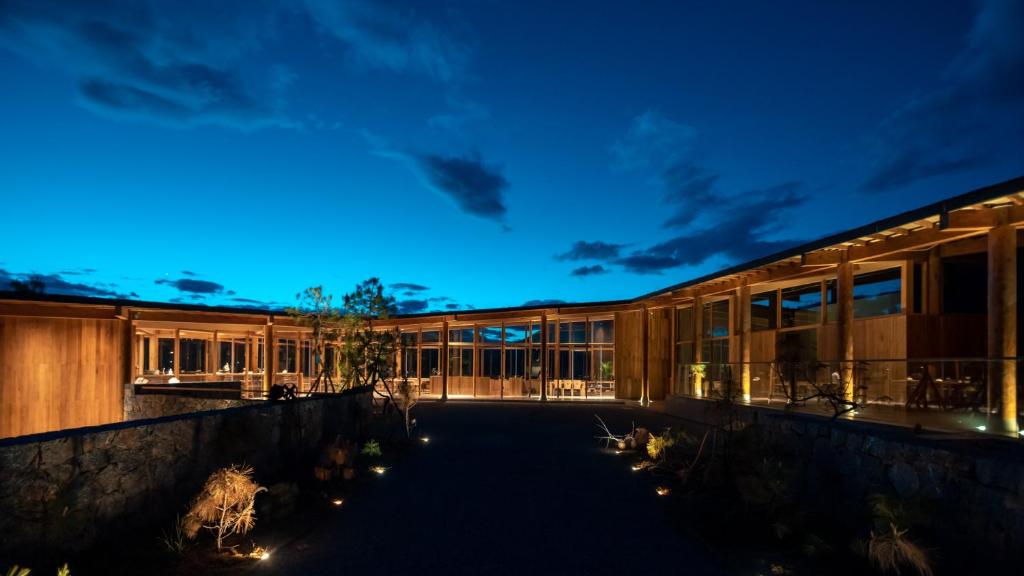
THE OLD THEATRE INN HAS CLOSED. FOR YOUR STAY IN SHAXI, WE RECOMMEND THE LINDEN CENTRE AT SHIBAOSHAN.
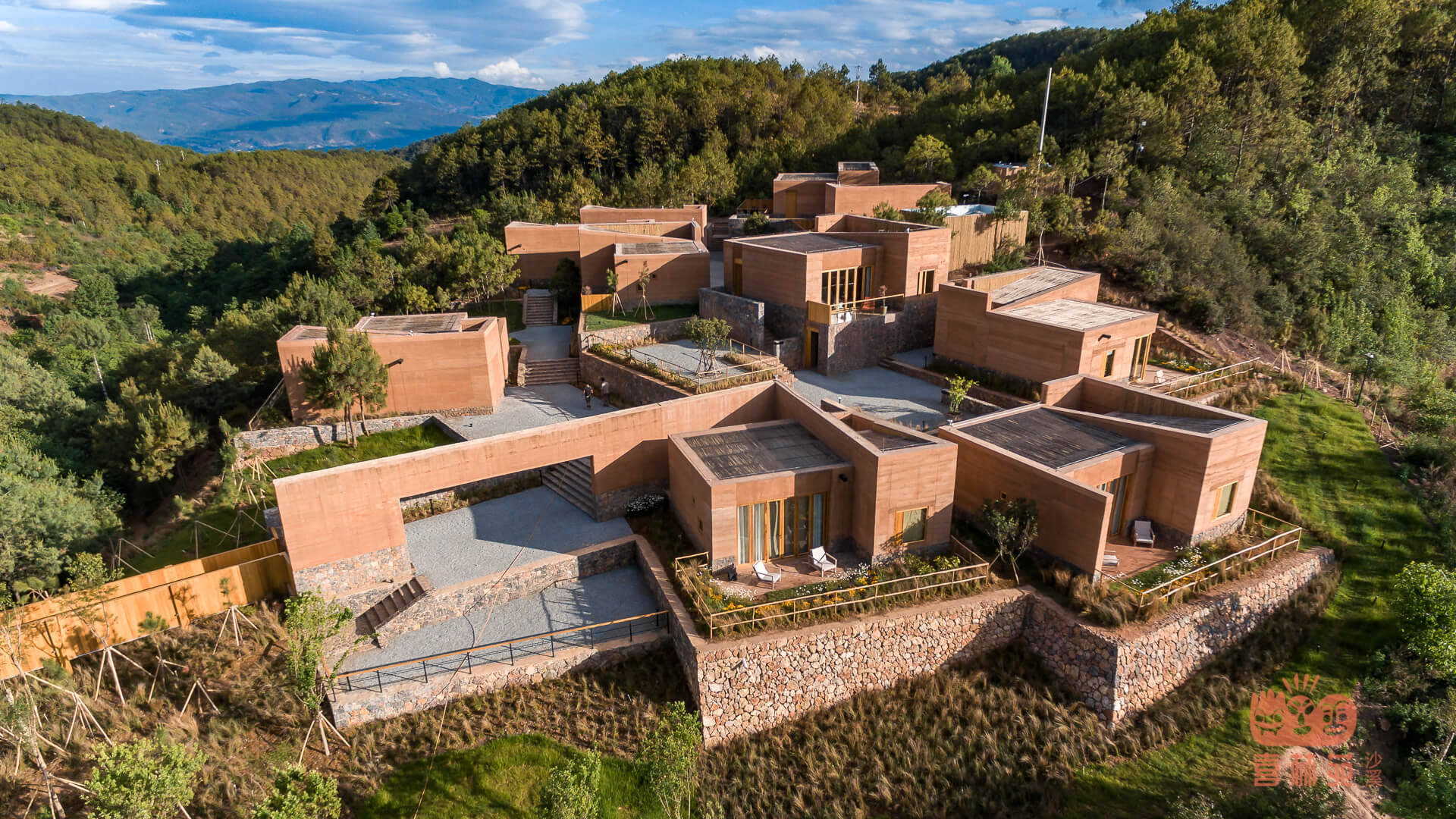
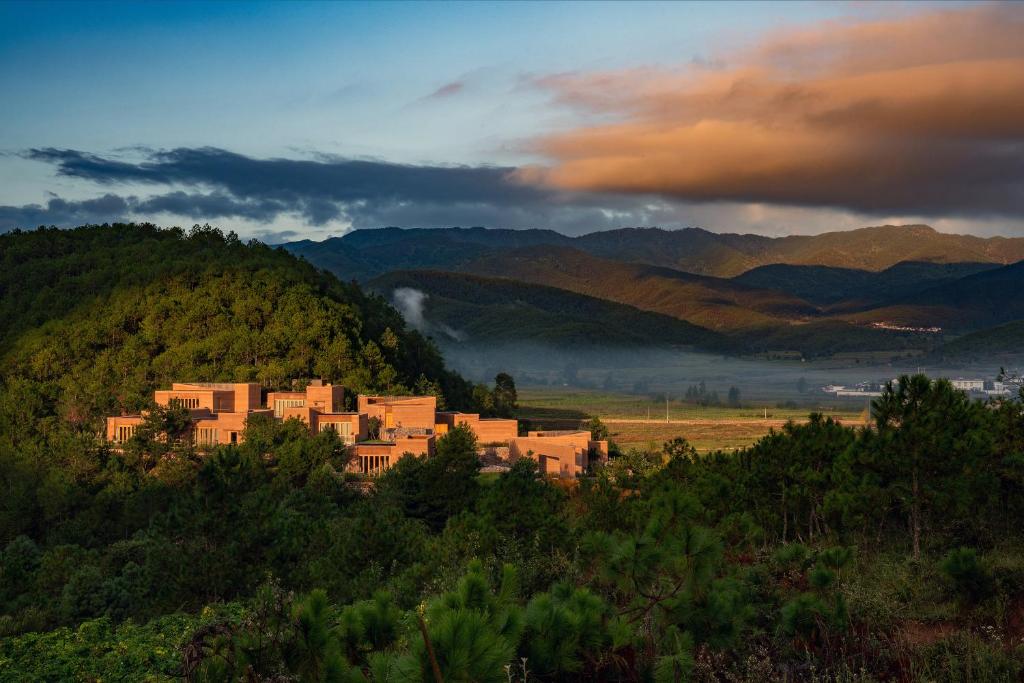
The Linden Centre is a beautifully designed eco-conscious property and one of Yunnan's finest cultural retreats, run by people who share our love of this valley. We're glad to send you their way.
Nestled deep in the Himalayan foothills, halfway from Lijiang to Dali, Shaxi is home to a beautifully preserved traditional way of life that offers a glimpse into a forgotten era. Here lies the tranquil Shaxi valley, a sun drenched, fertile plain that follows the gentle Heihui River 黑惠江 (Hēi huì jiāng), a lesser known branch of the Mekong. There is no pollution, no airport and no traffic jams, but these are more than made up for by quiet cobbled streets, spectacular local architecture and impressive courtyard homes. Shaxi has been protected from mass tourism due to its relative distance from popular destinations in Yunnan. But a new highway has made the driving distance from Lijiang to Shaxi just 90 minutes. The local government, keen to protect Shaxi's unique cultural heritage, is working with a conservation team that aims to create a sustainable travel strategy for the valley, encouraging activities that provide ownership opportunities for local families. Despite its proximity to the two of the busiest tourist locations in the country, Shaxi remains a quiet, sleepy region that attracts environmentally aware visitors, rather than coach loads of hungry souvenir shoppers. Here the attractions are the unspoiled countryside, millennia of history and the rich, local culture.
OLD THEATRE INN
Authenticity and serenity in a stunning setting
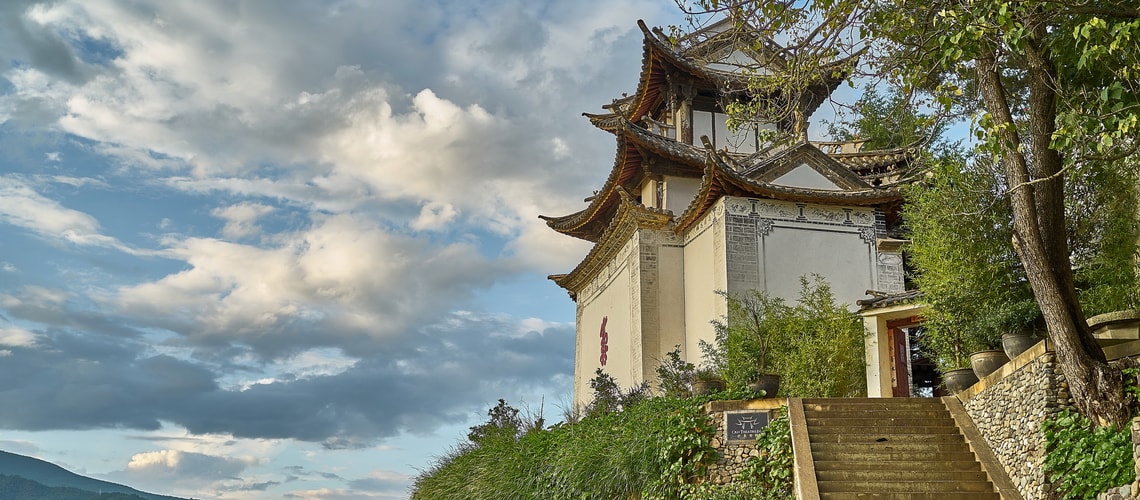
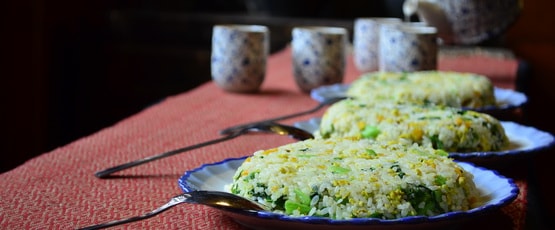
The Shaxi Old Theatre Inn is not just the only historically listed Shaxi heritage hotel, but a much needed retreat from China's breakneck development, and at mealtimes it becomes a foodies' paradise to boot. The converted schoolhouse building has just five guest rooms, each with a cosy western en suite, slate tile rain shower, and large clerestory windows to soak up that warm winter sun. Alongside this is a main dining area, where guests can sample the very best in Bai cuisine as well as yummy western comfort food, including fresh apple cobbler, quince and fig cheesecake and homemade walnut bread.
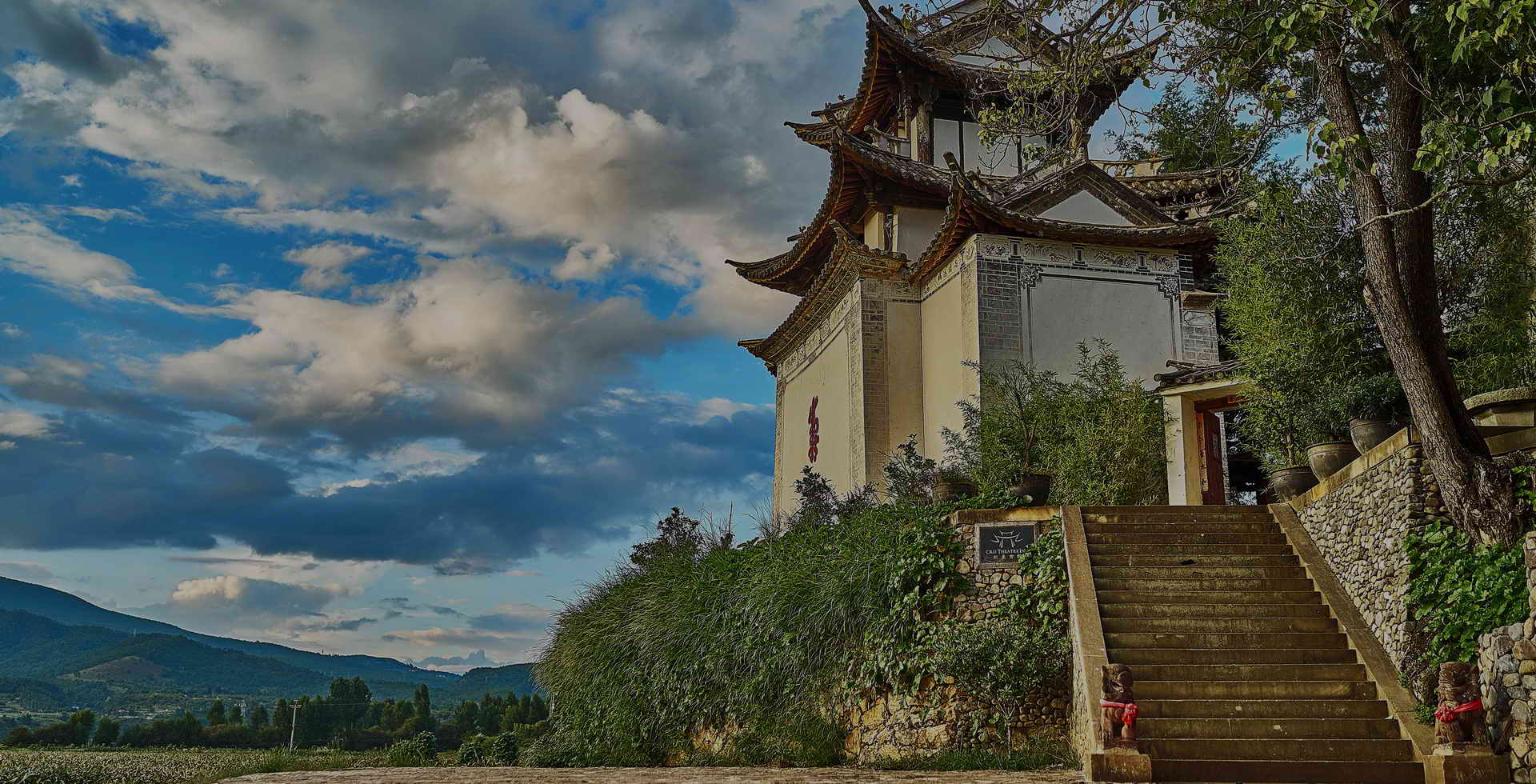
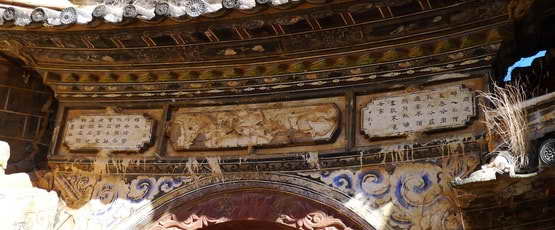
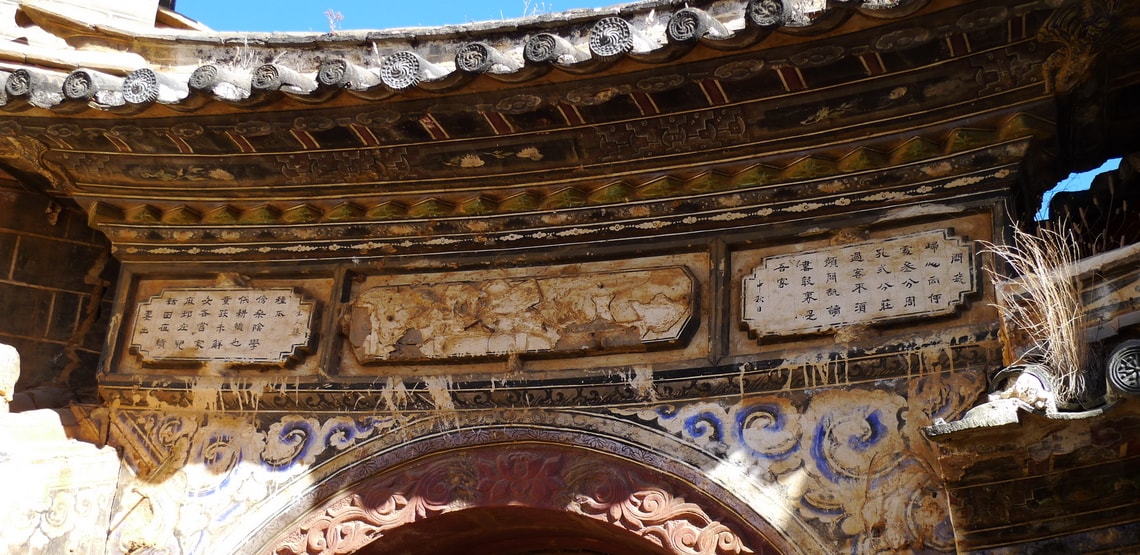
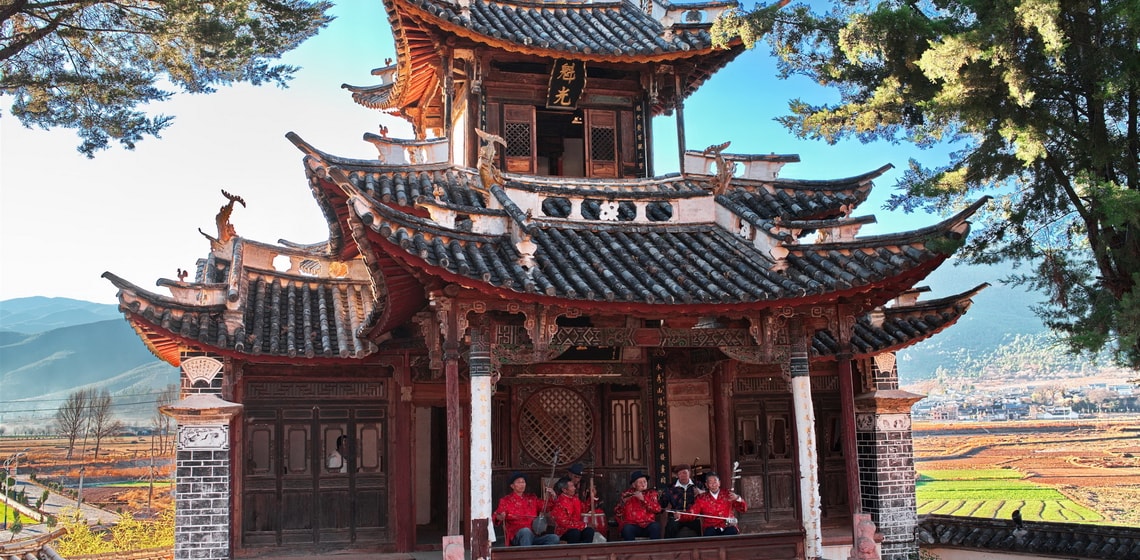
The centerpiece is the temple theater building, an opera stage and shrine to the God of Culture built in the early Qing Dynasty, fully restored as part of the Shaxi Rehabilitation project (SRP). The ground floor is storage space for mountain bikes, so that visitors can head off and explore the valley, while there are often calligraphy classes given in English by the current partner, Wu Yunxin, on the first floor. This leads out to the stage area, where the traditions of Bai music are being revived, and local elders perform for visiting dinner guests.
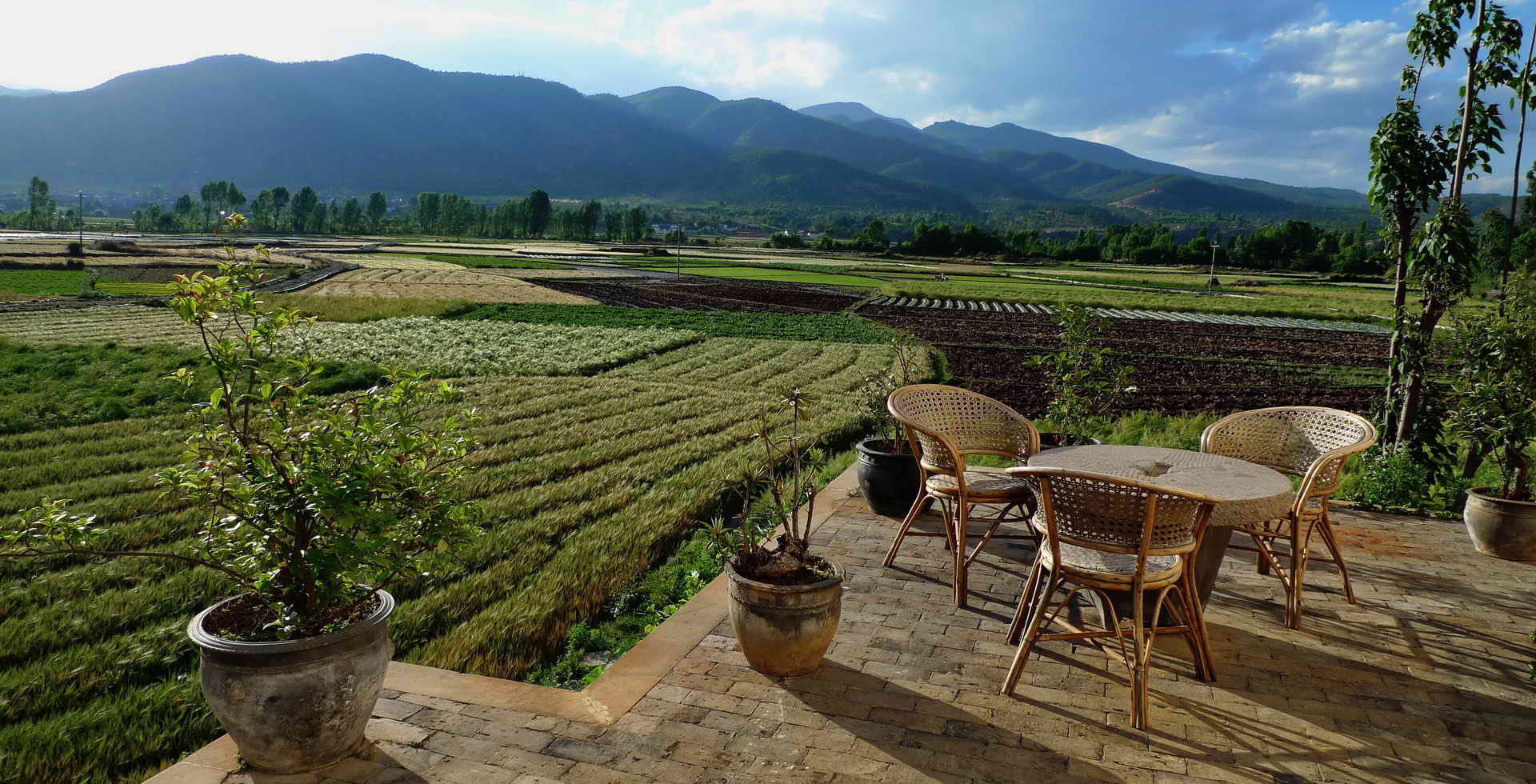
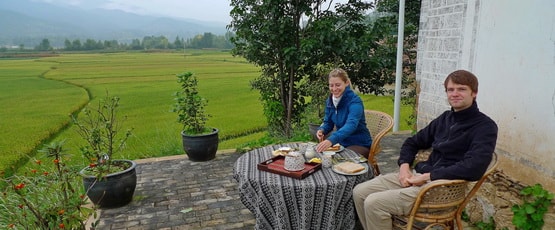
With its expansive views across the rice fields, this is the ideal location to relax on the front terrace with a freshly brewed Yunnan coffee, and watch the sun sink slowly behind the Hengduan Mountains. Despite the intricately carved construction, the hefty sandstone flagstones and the bucolic rural location, Old Theatre Inn has all the modern comforts needed to keep city folk happy. 24-hr broadband wireless Internet, lovely English-speaking local village Bai staff, complimentary western breakfasts and private car pick ups, all mean that guest comfort is in no way compromised by the tranquil, rural setting. Guests from all over the world repeatedly confirm that a visit the the Old Theatre Inn is a once in lifetime experience.
In this age of long haul flights and high speed trains, it is hard to believe that a properly sealed road first linked the Shaxi Valley to the outside world as recently as 2009. The cobbles of the original thoroughfare are still clearly visible in many places, but the new road has taken a great deal of pressure away from the Shaxi ancient town of Sideng 寺登 (Sì dēng). What remains is a fascinating window onto a China that has long disappeared in the rest of the country.Shaxi ancient town is still criss-crossed with narrow alleys that once rang out to the clang of heavily shod pack horses, but now form a fascinating maze for intrepid, curious travelers. While the main square is the perfect antidote to the endless package groups of Lijiang, the very best time to view this sanctuary of calm is first thing in the morning or very late at night. This is the perfect spot for Tai Chi exercises in the early dawn light, or literary inspiration in the ebbing rays of late afternoon. Ornate compound gates and entrance passages lead to courtyard microcosms of Bai home-life that have sometimes barely changed in the last forty centuries. Many of what were once tack shops, blacksmiths and caravanserais have already been converted into guest houses and souvenir stores, while others maintain their original function as homes to people and animals alike. Rammed earth and gravity defying eaves guide visitors down narrow alleys, where prickly pear cacti are a natural precursor to tall barbed wire fences, and sinuous bougainvillea splash the earthen tones with explosions of purple blooms.
At one time the small square was home to a bustling market nearly every day of the week, but this has now been relocated to the new part of town and is known as Shaxi Friday Market. The ancient flag stones that surround the central pagoda tree are encouraging a new community of hikers, history buffs and eco-tourists. In the last century, Shaxi's Sideng market went from thriving economic center to a remote and inaccessible ghost town, but this national landmark is now undergoing a twenty-first century renaissance, and promises to become one of the most impressive attractions in all of Yunnan.
Out beyond the East Gate is the ancient Yujin Bridge, a long time favorite of visiting artists and a vital crossing point in this complex network of ancient trade routes. Its classic humpback construction makes it an ever popular photo opportunity with visitors.
Shaxi Shibaoshan
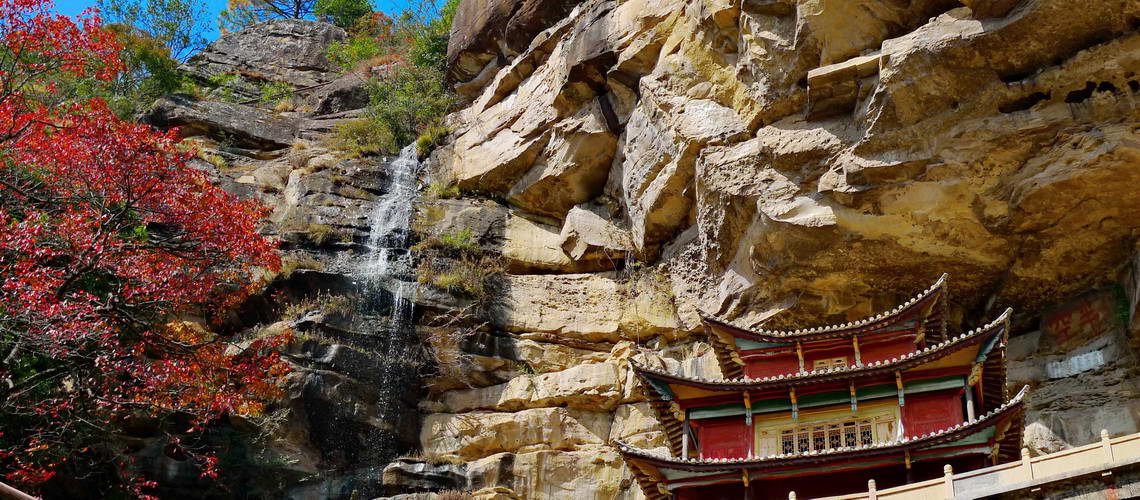
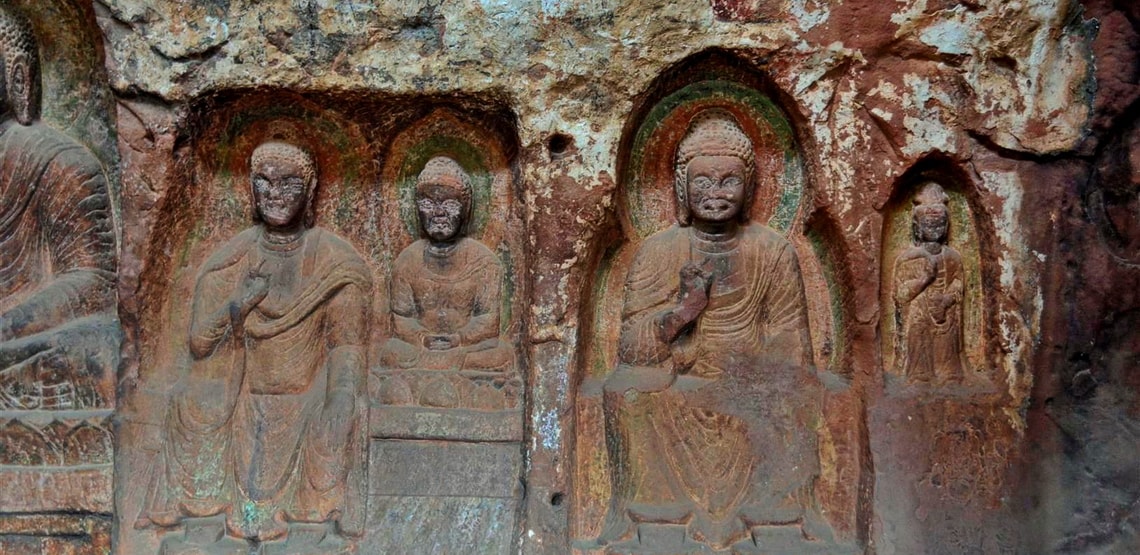
Shaxi Shibaoshan 石宝山 (Shí bǎoshān or Stone Treasure Mountain) lies about 10km north of Shaxi on the road to Jianchuan, and was one of the very first nature reserves and religious sites to be officially protected in China back in 1982. The 2000 hectare area is made up of three separate mountains reaching up to a height of 3083 meters, known as Mount Baoding, Mount Shisan and Mount Shizhong, along with four temples; Shizhong Temple, Baoxiang Temple, Haiyun Temple, and Jinding Temple. Thanks to the areas remoteness, the temples and grottoes miraculously survived the destruction of the Cultural Revolution. The geology here is a known as a danxia land-form, made up mainly of red sand stone and conglomerates dating back to the cretaceous period. In some places the formations resemble a tortoise' s back, caused by cascades of water running along it, similar to the erosion seen at the site of the Sphinx in Giza. The Shaxi Shibaoshan rock carvings are over 1300 years old and valuable historical evidence of the spread of Mahayana Buddhism into Yunnan from Tibet. Gentle winds from the south push the clouds up until they circle the peaks, giving the impression that many of the temples and grottoes are floating in the ether, abodes of the gods that are literally suspended from the heavens.
Mini buses take about forty minutes to the main Shibaoshan turn off, but a better option is to hike up into this beautiful area of forests and scattered temples. Just after the gas station on the left of the main road, look for kilometer mark 113, and turn left (west) onto a dirt road. From there it takes about twenty minutes to reach the southern edge of the Shibaoshan area and about another two hours up into the mountains to reach the main Shizhong Temple 石钟寺 (Shí zhōng sì). The entrance fee is 50 yuan. This area receives surprisingly few visitors, and the result is pristine hiking country with virtually no crowds. Even the most energetic of hikers will probably need three days to explore all of the beautiful scenery, but please be aware that flash photography in the grottoes can damage the long term integrity of these ancient carvings.
Pear Orchard Temple Dining
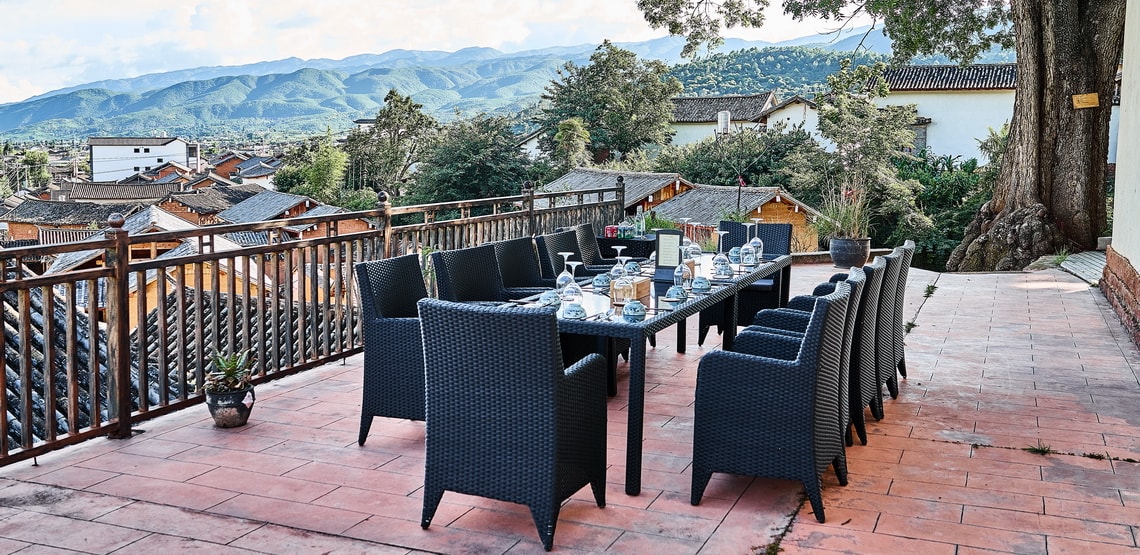
The Shaxi Pear Orchard Temple is a former nunnery in Diantou Village at the entrance to Shaxi Valley. Known in local languages as Cí Yīn ān 慈荫庵 or Sheltered Mercy Nunnery, offers a glimpse into local folk religion with many shrines, niches and sacred halls. Off an upper courtyard lies the Pear Blossom, an organic vegetarian restaurant with indoor tea house style dining, as well as seating on an upper terrace with sweeping views of Shaxi Valley and surrounding mountains. The top temple, shaded by enormous broadleafs, was until recently in a very poor state of repair. Originally built to honor the Jade Emperor, time has taken a terrible toll on this ancient building. Restored in 2014, now visitors can look forward to leisurely lunches and starlit dinners on the alfresco upper terrace. The menu is farm-to-table, with local specialties of goat cheese, mushroom medley, a trio of stir-fried bell peppers and Shaxi baba - a kind of soft flatbread both sweet and savory. The temple also stocks an assortment as imported wines as well as local beer.
Reservations are a must and can be made through reception at Old Theatre Inn, the Linden Centre in Dali and Laomadian Guesthouse in Shaxi ancient town. Please call Sam at +8613577258117 before 12pm to reserve a table at this very unique dining experience in Shaxi.
Ancient Music Performance
Shaxi ancient music is the last surviving tradition of ritual music that originated possibly as far back as the Song Dynasty and can be heard in live performances throughout the year in the Shaxi Valley. The music is called Dongjing 洞经 (Dòng jīng) literally "near the cave". Dongjing is said to have been sung by Taoist monks from the region. There are also traditional Dongjing operas, such as Song of the Water Dragon, Waves Washing the Sands and The Sheep on the Hill. It is played on traditional string and percussion instruments, typically by an ensemble of anywhere from 4-16 men, while women may accompany with song. Currently in Shaxi the rare opportunity to hear this ensemble, apart from the once a year Shaxi Singing Festival, is at the Old Theatre Inn. The music is performed by a group of village men now in their 70's and 80's on the old theatre's opera stage. The cost is RMB 800 and may be shared among a group of guests. The show lasts approximately 45 minutes and includes 8 songs.
MORE THINGS TO DO IN SHAXI
VIST Shaxi Bookstore
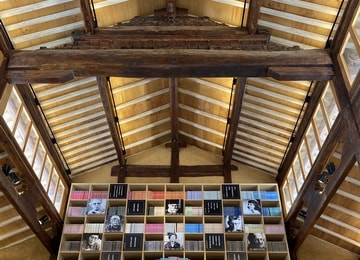
Opened in May 2020, the Shaxi Bookstore is a uniquely restored traditional rammed earth building. Just a 20-minute walk from Old Theatre Inn along the Heihui River is scenic Beilong Village 北龙村 (Běi lóng cūn) is one of the most beautiful bookstores in China, which also houses a very respectable coffee shop.
HIKE TO SHIBAOSHAN
From Pear Orchard Temple, hike up an ancient road through pine forests to the Shizhong Temple grottoes. A special ticket price for being our guest and an introduction to the millenia old carvings by Old Theatre Inn partner and local historian, Mr. Wu Yunxin.
JOIN A TRADITIONAL DANCE
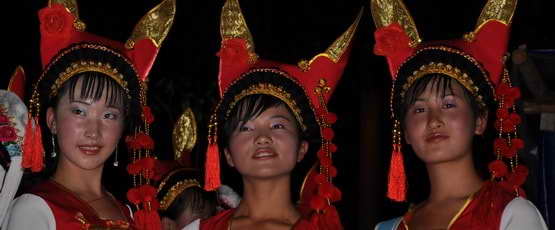
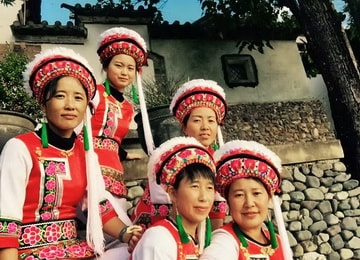
Our five local staff will demonstrate Bai dance in traditional dress and teach you the basics of these movements set to local music. Our lovely team are all skilled members of our Duan Village Women's Dance ensemble.