Slider

  • yulong river Yangshuo mountain retreat guilin Yangshuo China
    SHAXI CHINA

    être inspiré

À PROPOS DE SHAXI YUNNAN CHINA

TERRE ET PERSONNES

Shaxi china tazi hui - shaxi old town yunnan china


FAITS SAILLANTS DE SHAXI

SHIBAOSHAN
shaxi-shibaoshan

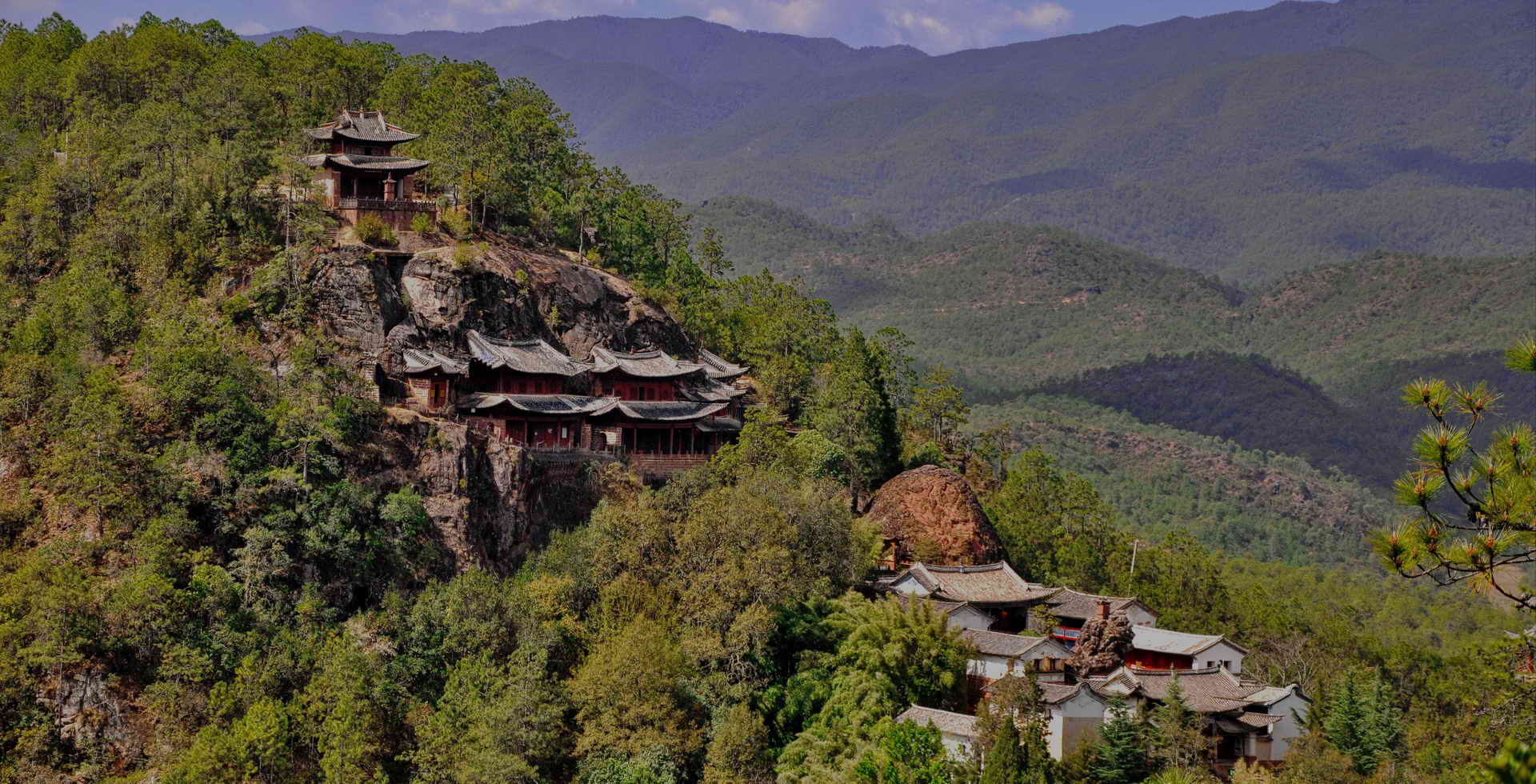
Shibaoshan 石宝山 (montagne au trésor de pierre) se trouve à environ 10 km au nord de shaxi sur la route de jianchuan, et a été l'une des toutes premières réserves naturelles et sites religieux à être officiellement protégés en Chine en 1982. La superficie de 2000 hectares se compose de trois montagnes distinctes, connues sous le nom de mont baoding, mont shisan et mont shizhong, ainsi que quatre temples; temple shizhong, temple baoxiang, temple haiyun et temple jinding. Grâce à sa situation isolée, les temples et les grottes ont miraculeusement survécu à la destruction de la révolution culturelle. Voir plus sur notre page dédiée Shibaoshan.

SHAXI ANCIENT TOWN
shaxi-ancient-town

Cette ancienne place du marché était autrefois le centre animé de la route des caravanes de chevaux de thé. Il abrite le temple Xingjiao, récemment restauré grâce à une subvention du gouvernement suisse. L'ancienne ville de Shaxi est encore sillonnée de ruelles étroites qui sonnaient autrefois au bruit des chevaux de bât lourdement chaussés, mais forment maintenant un labyrinthe fascinant pour les voyageurs intrépides et curieux. Beaucoup de ce qui était autrefois des magasins de matériel, des forgerons et des caravansérails ont déjà été convertis en maisons d'hôtes et magasins de souvenirs, tandis que d'autres conservent leur fonction d'origine en tant que maisons pour les personnes et les animaux. En savoir plus sur notre page dédiée à la vieille ville de Shaxi.

MARCHÉ DU VENDREDI
shaxi-friday market

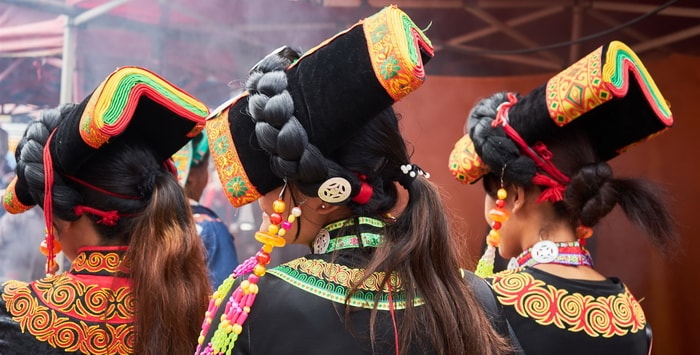
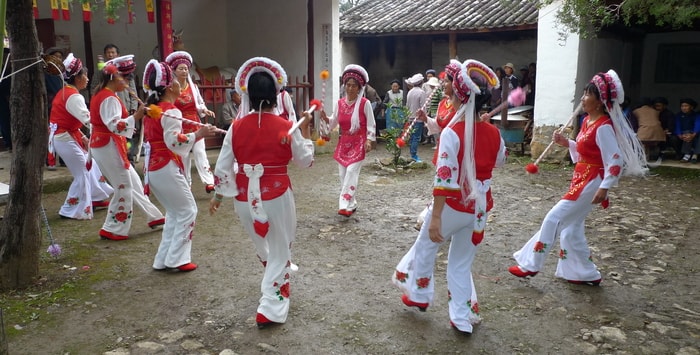
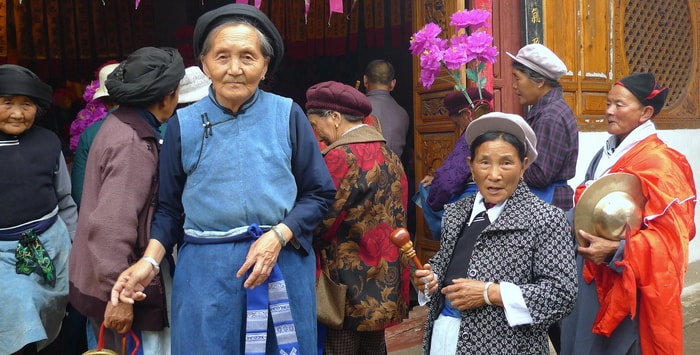
Le jour du marché est le point culminant de la semaine dans la vallée de Shaxi, lorsque tout le monde se rassemble dans la vieille ville pour s'approvisionner en produits et échanger des histoires. Des rangées de matriarches Bai habillées de façon traditionnelle se serrent le long du trottoir pour offrir une large gamme de fruits et légumes locaux, cultivés dans de petites fermes familiales. Les femmes Yi en écarlate brillant et turquoise audacieux, descendent pendant des heures de leurs villages de montagne pour faire du commerce avec les plaines, ce qui en fait l'un des jours de marché les plus colorés et photogéniques du Yunnan.
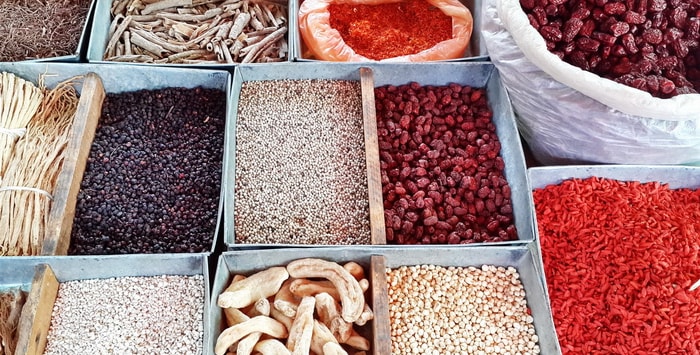
À gauche de la rue principale se trouve le marché de la viande, où vous pouvez trouver du fromage de chèvre fraîchement préparé, des cloches de vache et du matériel de cheval artisanal. Sur le marché humide, sur la droite, les visiteurs peuvent trouver toute une gamme de fruits et légumes locaux inhabituels, des bulbes de skirret et de lotus aux pommes de coing et de crème anglaise. Des vendeurs ambulants remplissent la rue principale, colportant tout, des outils agricoles aux arbres fruitiers. Recherchez les fabricants de perruques qui achètent des cheveux au kilo (coupés et pesés sur place), les dentistes de la chaussée et les bon marché chinois Han itinérants essayant désespérément de fouetter les derniers appareils économiseurs de main-d'œuvre. Au-delà des minibus, n'oubliez pas de visiter le marché aux bestiaux où porcelets, chèvres et même buffles d'eau sont tous disponibles pour inspection et achat. N'oubliez pas de faire le plein de pommes et de carottes, car cela vous permettra de vous faire rapidement des amis rapides avec les chèvres, les ânes et les poneys que vous rencontrez lors d'une randonnée.

LA VIE DU VILLAGE
shaxi-village life

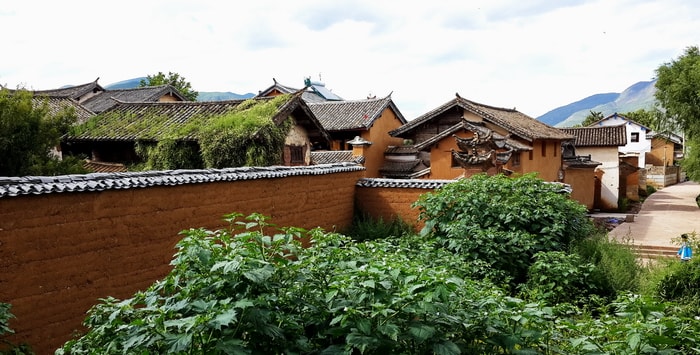
La vallée de Shaxi abrite 16 villages, tous avec leur propre saveur unique. Une promenade à travers ces villages révèle un peuple vivant dans de grandes cours traditionnelles construites en terre battue et en pierre, décorées de jardins ornementaux. Le San Fang Yi Zhao Bi (littéralement: "trois chambres et un mur" est le grand complexe composé que les Shaxi construisent et vivent encore aujourd'hui. Ici, vous trouverez des chèvres, des vaches, des cochons et des ânes occupant des granges dans les sections arrière, les familles élargies s'occupent de la vie traditionnelle.Les Bai de Shaxi sont chaleureux et accueillants pour les visiteurs et vous pourriez vous retrouver invité chez quelqu'un pour un thé ou même un repas.

PEAR ORCHARD TEMPEL
shaxi-temple-ceremony

Connu localement sous le nom de “Ci Yin An” 慈 荫 庵 (Temple de la miséricorde abritée), ce complexe de temples à plusieurs niveaux à couper le souffle, offrant des vues spectaculaires sur la vallée depuis son point de vue à la tête du village de Diantou, était en fait un couvent fonctionnel jusqu'au purges religieuses des années 60. La série de sanctuaires, de salles et de cuisines a été récemment restaurée par le designer américain Chris Barclay, constructeur du Yangshuo Mountain Retreat et du Yangshuo Village Inn dans la province du Guangxi. Des artisans locaux experts ont été employé pour préserver les structures d'origine grâce à des techniques de construction traditionnelles et mettre en valeur leurs incroyables compétences en menuiserie et en maçonnerie en pierre. Entouré de quelques-uns des derniers poiriers anciens, le Pear Orchard Temple abrite désormais un restaurant végétarien primé, Pear Blossom Organic, ainsi que des cours de cuisine dirigés par la chef du temple Madame Yang.

MUSIQUE ANCIENNE
shaxi-music show

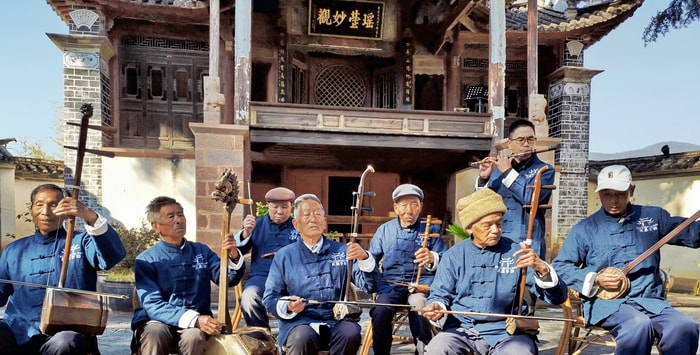
L'unique Dongjing Guyue 洞 经 古乐 («La musique ancienne de la grotte) est une tradition musicale qui s'estompe dans les régions de Bai et Naxi du nord du Yunnan. Jouée par un ensemble de huit hommes et jouée principalement sur des erhu (violoncelles à deux cordes) et des percussions, la musique raconte des histoires de la région de Dali. Actuellement, à Shaxi, il y a encore quelques ensembles villageois composés d'hommes âgés qui jouent toujours. Se produisant principalement lors de festivals locaux, un groupe peut être entendu certains soirs au restaurant Xi Lu dans la vieille ville de Shaxi et un autre dans le village de Duan, sur la scène du temple du théâtre antique à Old Theatre Inn

BAILONGTAN SPRING
shaxi-bailongtan-spring

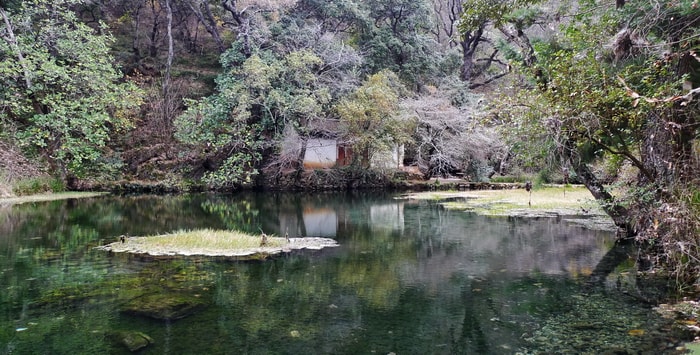
À l'extrémité sud de la vallée, après l'ancien pont Shi'ao (tortue de pierre) et sur la crête, se trouve un vieux bosquet qui protège une source naturelle qui alimente les villages locaux depuis de nombreux siècles. Les chênes vénérables et les magnolias sénescents peuplent un entonnoir naturel qui, au fil du temps, a forcé les rameaux jusqu'à ce qu'ils se trouvent juste au-dessus de la surface de l'eau. Ce bosquet a toujours été une zone sacrée pour les populations locales, et il y a une légende selon laquelle un dragon blanc habite une profonde caverne de montagne à flanc de colline. Les jeunes mariés ont fait de la randonnée ici après leurs noces, et les parents placeraient des bols en argent à l'embouchure de la grotte, de précieux cadeaux de mariage des redoutés et pourtant des habitants vénérés de la montagne.
Bien qu'il y ait un petit sanctuaire, Bailongtan 白 龙潭 Bái lóngtán (source du dragon blanc) est vraiment une passerelle vers les collines pour les randonneurs et les randonneurs. Au nord, des vergers de kakis bordent les rives du ruisseau, et au sud, des buissons de sureau s'accrochent au flanc d'une colline qui contourne un ravin qui se dirige vers l'est-ouest. De là, il y a une pléthore de sentiers menant aux collines, où les pâturages et les sommets conviennent à tous les niveaux de marcheurs.


SHAXI FESTIVALS

FESTIVAL DU CHANT DE SHAXI
shaxi-festivals

Une expérience magique sur Shibaoshan

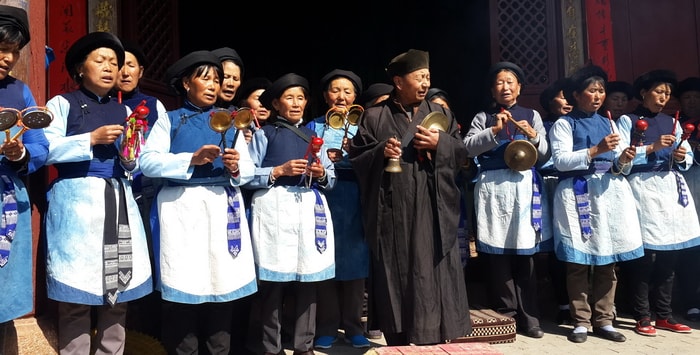
Autrefois, les jeunes locaux se réunissaient au temple de Baoshan pendant les 3 jours du 27 au 29 chaque mois lunaire, pour chanter des chansons d'amour et courtiser d'autres jeunes célibataires. Ces jours-ci, l'activité s'est concentrée sur un événement annuel qui commence le 27 du septième mois lunaire. Le Shaxi Singing Festival (沙溪 歌 会) est l'un des événements colorés de l'année, et c'est une grande expérience de voir tous les sous-groupes locaux des Bai et Yi se révéler dans leurs meilleures robes. Les temples sont pleins de VIP, d'équipes de télévision et de bricoleurs itinérants, tandis que les habitants se disputent les titres de roi et de reine chanteurs. Comme Shibaoshan lui-même, le festival ne reçoit pas beaucoup de visiteurs de loin, mais compte tenu de sa facilité d'accès et de son magnifique spectacle, cela est susceptible de changer dans un avenir très proche. Mieux encore, les jours du festival, le prix d'entrée est réduit à seulement 2 RMB. Vous pouvez voir des photos des gens du Shaxi Singing Festival et d'autres images de Shaxi dans notre galerie Google.

FESTIVAL DU PRINCE HÉRITIER DE SHAXI
shaxi-prince-festival

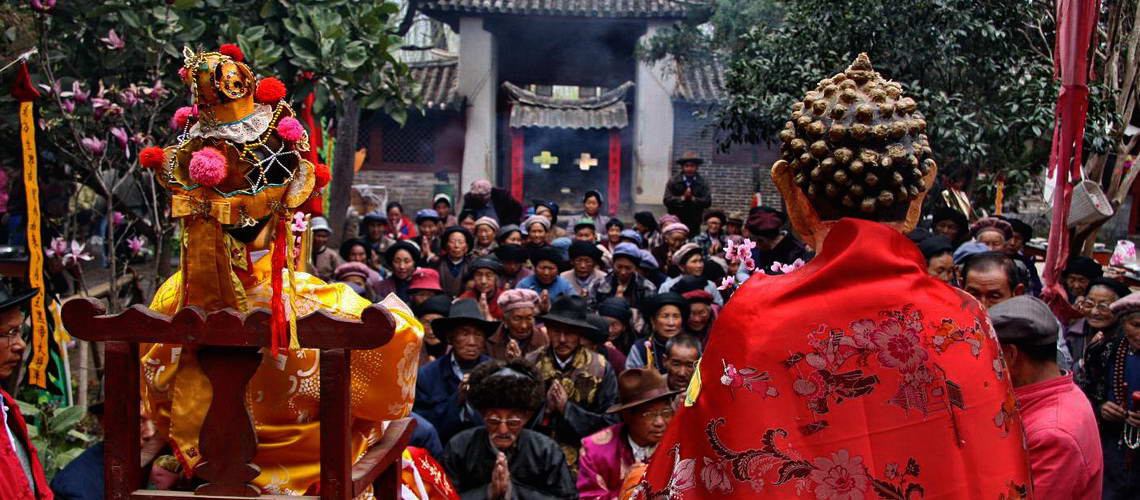
Le Festival du Prince héritier (沙溪 太子 会) a lieu en mars dans la vieille ville de Shaxi. Les effigies du prince héritier et de Sakyamuni sont portées en procession autour des quatre portes cardinales, tandis que les enfants se déguisent en petits princes et princesses. Les festivités culminent avec un spectacle donné sur la scène du temple de Sideng, et c'est l'une des rares fois où la vieille place souvent déserte est pleine à craquer.

FESTIVAL DE LA FLAMME À SHAXI
shaxi-temple-fair

Le Festival de la flamme (沙溪 火把节) qui a lieu le 25 du sixième mois du calendrier lunaire, est ancré dans la culture agricole locale. Dès que le riz commence à mûrir, les villageois et les agriculteurs emportent des torches dans les champs pour effrayer les oiseaux et les insectes qui pourraient manger les précieuses récoltes. Dans les villages, de grandes torches atteignant 20 mètres de haut, faites de tiges et de branches de pin, sont ornées de fruits, de feux d'artifice et de drapeaux imprimés de caractères chinois de bon augure. La danse et la boisson se poursuivent jusque tard dans la nuit, mais heureusement, les célébrations ne sont pas aussi bruyantes qu'à Dali, où le jet de poudre d'incendie peut rapidement devenir incontrôlable.


   PEOPLE OF SHAXI

THE BAI

Occupying the region for at least 3,000 to 4,000 years, the Bai are the second-largest minority group in Yunnan, as well as being one of the oldest. The 2000 census identified just over 1,800,000 individuals as Bai and speaking the Bai language, 80% of whom live in the Dali Bai Nationality Autonomous Prefecture in Yunnan Province. In Guizhou, the Bai can also be found in Bijie, and in Sichuan they live near Xichang. Throughout their history, the Bai have dominated by controlling the richest agricultural lands, either administering the region for others or ruling outright through a number of prominent families. Scattered throughout the Shaxi valley are sixteen Bai minority villages. The population of these villages ranges from a couple hundred to a few thousand in the main village of Sideng, with about 22,500 for the entire valley.
Shaxi retains the vestiges of a matriarchal society, but in the twenty first century, this now extends only as far as children taking the family name of their mother. The Bai—the "white"—revere the color, which they regard as noble and is the main color of their traditional dress. An unmarried girl always combs her hair into one pigtail, tied with a red string at its end, and then coils it over her head. In general, girls enjoy dressing up like beautiful camellia flowers on special occasions, and so it is hardly surprising that they are referred to not as 'miss' or 'young lady' but as 'jin hua' or 'golden flower'.


Bai Religion

Considering their crossroads location, it is hardly surprising that the Bai have adopted practices from Han Chinese ancestor worship, as well as that of Indian Buddhism. In most villages, the cult of Guanyin, the Buddhist bodhisattva of mercy, a female fertility deity, is combined with worship of the Benzhu or Village Lords. This was probably influenced by the Chenghuangmiao or Gods of the City temples, (common to every Han Chinese city until 1949) so that every village has its own local god, often a historical figure such as the first ancestor to settle this area, a great sage or a local hero. It is very common to find Buddhist, Daoist, Confucian and Benzhu temples or shrines within a single Bai village, or even within a single temple complex. The mythologies surrounding these cults are extremely rich, as every deified character has his own history and legends. Iconography is therefore extremely varied to reflect these many tales. Many are rough-hewn hemp and papier-mâché images, often to be found riding fearsome beasts such as dragons or tigers in order to show their strength. Their role is to protect the village and its population. Worship takes the form of Bai language chants, local song and dance, and traditional Bai foodstuffs made as offerings. At the doors of these temples, are warrior guardians, usually at the sides of the main entrance. While Yunnan was an independent state, the Bai were enthusiastic in their adoption of Tantric Buddhism. This particular sub branch later became known as Azhali Buddhism, from the Sanskrit acarya, or "teacher."
In Shaxi the most popular form of temple is the 'kuixinge', many of which also incorporate performance stages. The kuixinge is devoted to a god of learning, a distinctive 'tutelary spirit' which the Bai traditionally hold in very high esteem. Perhaps the finest example of this is at the Old Temple Theater, outside the old town the village of Duanjiadeng, and restored as part of the Shaxi Rehabilitation Project. In the more remote areas, there are still vestiges of Bai primitive animism. It is not difficult to find places where different gods are honored, such as the God of the Mountain, the God of the Crops, the God of the Hunt, the Dragon King or the Mother Goddess of the Dragon King. The Bai believe that spirits can cause illness, but can also protect them. In some of the villages there are female shamans, sometimes with enough power to enter into trance, who still play an important role in the spiritual life of Bai villages.

The Yi

The Yi or Nuosuo ethnic group are historically known as Lolo, and number more than four million in Yunnan Province, most of whom are concentrated in an area hemmed in by the Jinsha and Yuanjiang rivers, and the Ailao and Wuliang mountains. Huaping, Ninglang and Yongsheng in western Yunnan form what is known as the Yunnan Lesser Liangshan Mountain area. The Yi's traditionally live in the mountainous areas, herding and hunting with susbsistance agriculture. The are likely descended from Tibetan and Naxi people and they practice a form of animism, led by a shaman priest known as the Bimaw. They still retain a few ancient religious texts written in their unique pictographic script, similar to the DOngba writing of the Naxi in Lijiang region. Their religion also contains many elements of Daoism and Buddhism. The Yi around Shaxi are scattered in Shaxi high mountain areas, mainly cultivating potatoes, corn, wild honey and Chinese traditional medicine such as ginseng. Vast forests stretch across the Yi areas, where Yunnan pine, masson pine, dragon spruce, Chinese pine and other timber trees, lacquer, tea, camphor, kapok and other trees of economic value grow in great numbers. The Yi of Shaxi can be seen in the valley particularly around market days. The women are distinguished by their brightly colored yellow, green and red clothing, often accompanied by ornate head dress.


   SHAXI HISTORY

THE TEA HORSE ROAD

The Southern Silk Road, better known as as the Ancient Tea Horse Caravan Road predated its more famous northern counterpart by at least 300 years, The first written records of the route are from the Tang Dynasty (618-907), which was locally known as the Nanzhao Kingdom period (649-920), but trade had been taking place long before this time. From the hillside plantations of Simao and Xishuangbanna the muleteers brought pu'er tea; Burmese traders, often accompanied by Indian monks bought hides and animal bones, for use in in Chinese medicine. Salt, an essential commodity before the advent of refrigeration, came from Qiaohou, south of Shaxi, and from Yunlong across the mountains to the west, along with silver from Misha, and nearby Heqing. As well as felt, silk and precious stones came that most valuable of medicines, opium, perhaps Yunnan's largest cash crop at the time. All of these and more were traded with Tibetans for items such as musk, rare fungi and exotic medicines, found in the frigid mountains to the north. The main village of Sideng became an important staging post for the caravans, and the whole valley flourished in the Ming and Qing Dynasties. The market square became famous throughout the southwest, and attracted traders from a wide range of cultures that only enhanced the profitability of the Tea Horse Road. Hani from southern Yunnan brought tea and rich cloths. Naxi from Lijiang brought timber, Muslim Hui bought yak furs and horses. The wealth generated by all this trade is clearly evident in the ornate local architecture, with their imposing gate towers and spacious courtyards. At the center of all this, stands the Qing dynasty theater, directly across from the 400-year old temple, dedicated to as wide a range of faiths as the merchants and pilgrims that turned this remote village into a vibrant trading hub, which lasted well beyond the end of the Qing Dynasty (1614-1911).
The caravan routes finally died out around 60 years ago, when the newly formed People's Liberation Army began its advance on western Tibet, and requisitioned every pack animal they could find. The centuries old trade routes came to an abrupt end by 1950, when the communists' ban on private markets put the last nails in the coffin. The locals quickly reverted to agriculture and passed the last few decades in relative isolation.
More recently, the World Monument Fund added Shaxi's market square to its Watch List of 100 Most Endangered Sites in 2001. By this time squatters had taken over much of the village, and many of the buildings had decayed to the point of collapse. In 2002, the Swiss Federal Institute of Technology Zürich (ETH) and the People's Government of Jianchuan County jointly established the Shaxi Rehabilitation Project (SRP) to protect and revitalize the cultural and natural heritage of Sideng Village and the Shaxi Valley. With USD1.3 million in funding from the World Monument Fund they hired a Swiss conservation expert Jacques Feiner, who had previously made his name at Yemen's old city of Sanaa, one of the earliest centers of population in human history. His approach has been to restore rather than rebuild, using traditional techniques and materials wherever possible. Apart from the restoring the temple and the stage, the entire market plaza was drained and relaid, which has led to a number of major awards, including a UNESCO Award of Distinction for cultural heritage preservation.
For thise interested to explore more about the Tea Horse Road's history, culture and legacy, we highly recommend Peter Micic's blog, the Tea Horse Road project. Peter is a skilled translator and writer, with a passion for Chinese history in this part of the country. He explores old tree plantations, writes poems and follows the original sections of the Tea Horse Road to give readers a first hand experience of what it was like to travel with the ancient mule caravans. An excellent source of this storied route's visual history is the award-winning documentary Delamu, which follows one of the last muleteers through the rugged Nujiang region of Yunnan. Along the way are intimate portraits of the indiginous people who still live along the Tea Horse Road.

ARCHITECTURE

'Sanfang Yizhaobi', literally "three houses with one front wall", is the most common Bai style home, and is characterized by three outer buildings forming a U shape, with a fourth wall as a screen. In the center is a large a courtyard, surrounded by doors and windows intricately carved with local birds and flowers, usually the work of craftsmen in nearby towns such as Diannan and Jianchuan. The large screen wall, sometimes known as the shining wall, serves an interesting double purpose. The first is to block out the winds the gather during the afternoons, while the second is to catch the reflected early evening rays, and illuminate the main house. In the winter months especially, when the sun's rays are low, this can mean a valuable extra hour of two of daylight in the main living room, something that was invaluable before the very recent advent of light bulbs and electricity.
The main wall is usually decorated either with a single character, such as 'Fu' for fortune, 'Shou' for longevity, or 'Xi' for happiness, or a short vertical couplet such as "Cai Yun Nan Xian" (colorful clouds appearing in the South), or "Nong Feng Cheng Xiang" (a dragon and a phoenix present a good omen). Stylized curlicues and floral designs soften sharp corners.
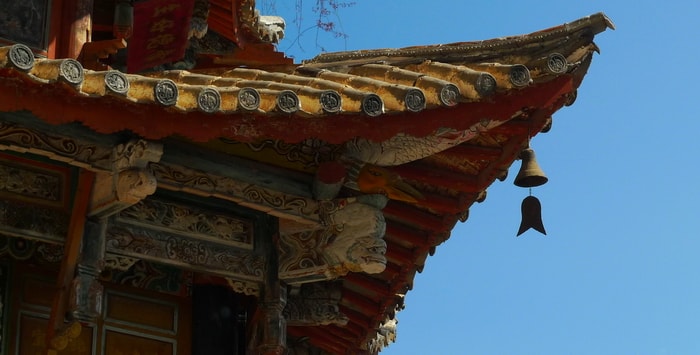
In a region famous for its year-round spring weather, it is hardly surprising that Bai family life revolves around the courtyard. Inside the patio, parterres are laid out with brightly colored flowers and bonsai trees, often surrounding large rock art mosaics that utilize local river stones. Many complexes have a front corridor (to help the feng shui) with intricately carved multi layered eaves. The tiled roofs boast graceful curves culminating in upturned ends, reminiscent of Thai temples.
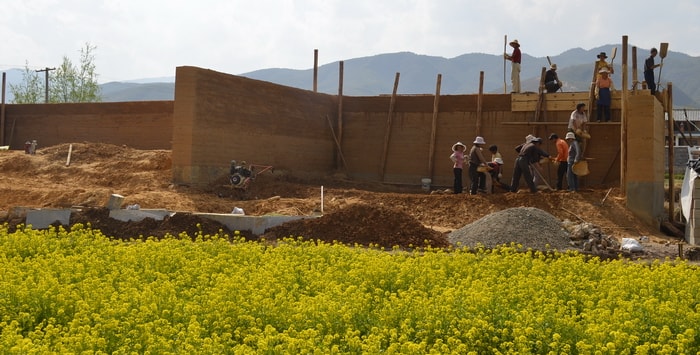
Most homes are composed of two floors, the upper rooms used for storage, while the lower rooms are for family living space. Foundations are constructed from locally quarried rectangular stones, that can often weigh in excess of three hundred kilos each, and need at least four men, a rope, and two yokes to put them in place. The walls themselves are made of rammed earth ('chong chang'), painted with slaked lime. Internal walls also receive artistic attention, often in the form of ink-and-wash painting. Perhaps most impressive of all, is that local carpenters do not use nails in the construction process. Instead of screws and hilti guns, a special "dougong" system of double brackets that support the roof atop the thick timber pillars.
For thise interested to explore more about the Tea Horse Road's history, culture and legacy, we highly recommend Peter Micic's blog, the Tea Horse Road project. Peter is a skilled translator and writer, with a passion for Chinese history in this part of the country. He explores old tree plantations, writes poems and follows the original sections of the Tea Horse Road to give readers a first hand experience of what it was like to travel with the ancient mule caravans. An excellent source of this storied route's visual history is the award-winning documentary Delamu, which follows one of the last muleteers through the rugged Nujiang region of Yunnan. Along the way are intimate portraits of the indiginous people who still live along the Tea Horse Road.


   SHAXI TRAVEL INFO

BANKS & ATMS
shaxi-bank-and-atm

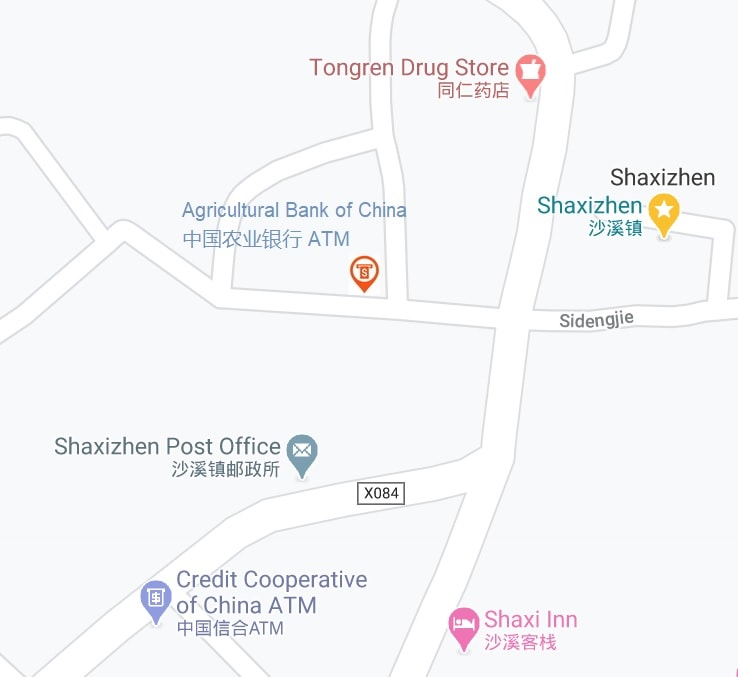
There are two banks with ATMs in Shaxi town. As you head up the market street away from the old town, the road turns to the right and after a series of shops and small restaurants, you will see the Post Office on your right and just past it across the street is the 农村信用社 (Nóngcūn xìnyòng shè) or Rural Credit Cooperative. Look for the bright orange facade with the ATM up the steps next to the door. The 中国农业银行 (Zhōngguó nóngyè yínháng) Agricultural Bank of China ATM is closer to the big stone and waterfall that mark the entrance to the old town. Facing away from the steps, cross the main street and continue directly up the street ahead. The bank is about 30m up the street to your right on the corner of a small side street.

MOBILE PHONE SERVICE

As you head up the market street away from the old town, the road turns to the right and immediately across the street, on the same side as Xilu Restaurant, you will find a China Mobile shop. There are other shops selling mobile phones on the other side of the street but they may not be authorized dealers. All will have spare batteries and accessories.

VOIR LES DISPONIBILITÉS


CONTACT